

Long before it became known as Riverhead, the settlement at the head of the Waitematā Harbour was called Pitoitoi, named after the native pipit bird that inhabited the open grasslands and coastal margins of the district.
For centuries, the area formed part of an important Māori landscape connected to the waterways of the Upper Waitematā.
Although there is no confirmed record of a permanent settlement at Riverhead itself, historians believe Māori maintained a regular campsite on the bend of the river above present-day Wharf Road, near the original wharf site.
Later, the Rangitōpuni area became significant as the location of a peace agreement between Te Kawerau ā Maki and Ngāti Whātua, commemorated in the name “Rangitōpuni”, meaning “day of the dogskin cloaks”.
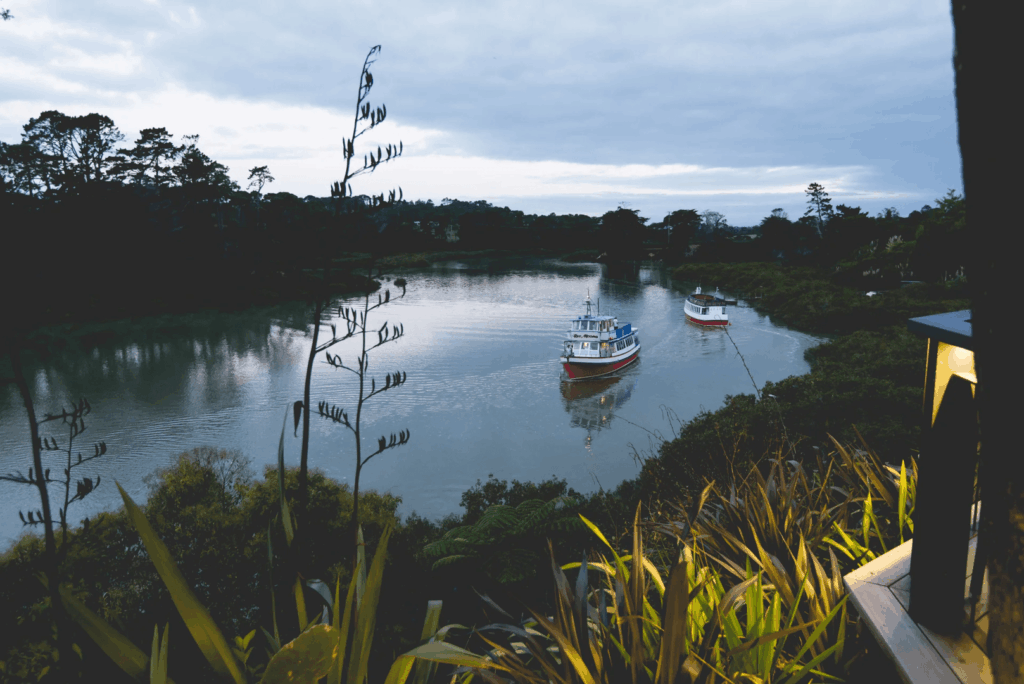
By the mid-1700s, the upper Waitematā had become an important water highway linking northern and southern tribal territories.
Unfortunately, it was also a route regularly travelled by war parties in waka taua.
To reduce the risk of attack, many Māori communities moved their settlements deeper into estuaries and hidden waterways where the smoke from cooking fires could not easily be seen from the main river channel.
When Reverend Samuel Marsden travelled through the area by waka in 1820, guided by Te Morenga of Ngāpuhi, he entered a landscape still dominated by native forest and waterways.
Within a generation, however, European settlers would begin transforming the district.
The Riverhead of the 1860s and 1870s was not the quiet village visitors know today. It was a busy frontier settlement built on transport, industry and trade. Before reliable roads and railways connected the district to Auckland, the river was the highway.
Steamers and cutters carried passengers, timber, flour, kauri gum, livestock and supplies along the harbour. Pigeons carried messages to Auckland, a much faster alternative to the long horse ride.
To travellers arriving by water, Riverhead was both fascinating and formidable.
Visitors described winding tidal channels bordered by vast mudflats, low hills covered in mānuka and scrub, and long timber jetties reaching across the estuary. An excursion to Riverhead in the late nineteenth century was considered an adventure. Passengers arriving on the steamer City of Cork found themselves climbing directly from the wharf up a steep bank to the settlement’s hotel, where thirsty travellers crowded the bar before exploring the district.
Behind the settlement stood the forests that fuelled Riverhead’s growth.
Vast stands of kauri provided the raw material for milling operations that became the economic engine of the district. The mills employed bushmen, labourers, bakers, sailors and tradesmen.
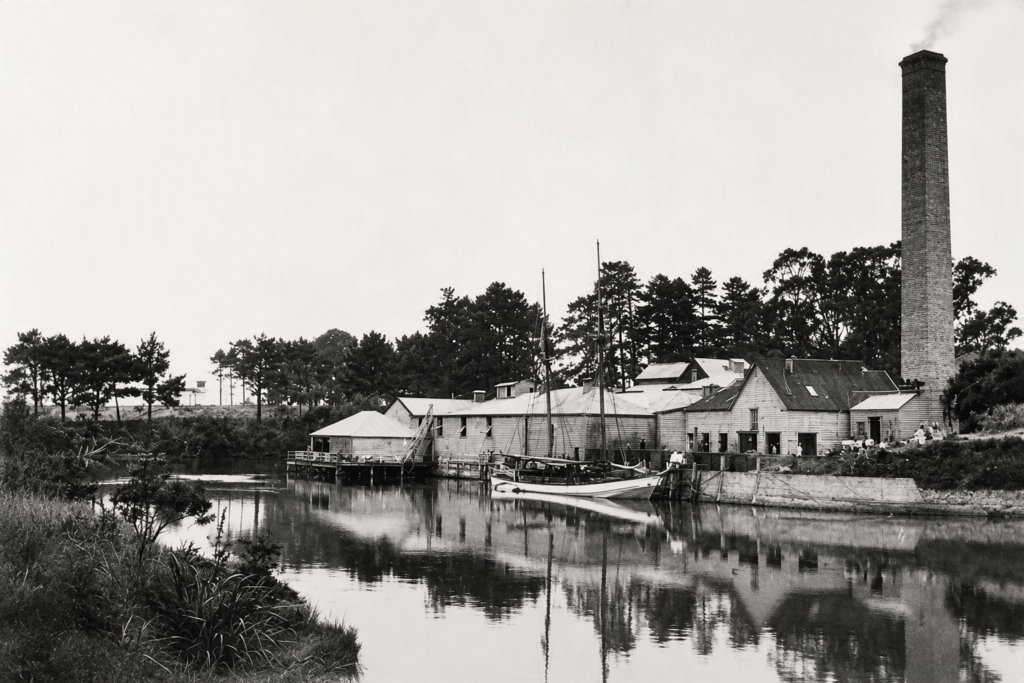
Among the most prominent was Lamb’s Mill, which drew workers from across the colony and helped establish Riverhead as one of Auckland’s important industrial centres.
As the forests retreated, paddocks expanded.
Settlers planted potatoes, oats, wheat and barley, believing the future prosperity of the district lay in productive agriculture rather than the fleeting wealth of gold rushes elsewhere.
Gum digging also became an important source of income, with tonnes of kauri gum shipped to Auckland from the district each year. Contemporary accounts describe the gum diggers as independent, hospitable and resilient people who lived simply but valued their freedom.
Today, the mills are silent.
The dams, wharves, tramways and industrial structures that once dominated the district have largely disappeared, surviving only as archaeological remnants hidden among regenerating bush and modern development.
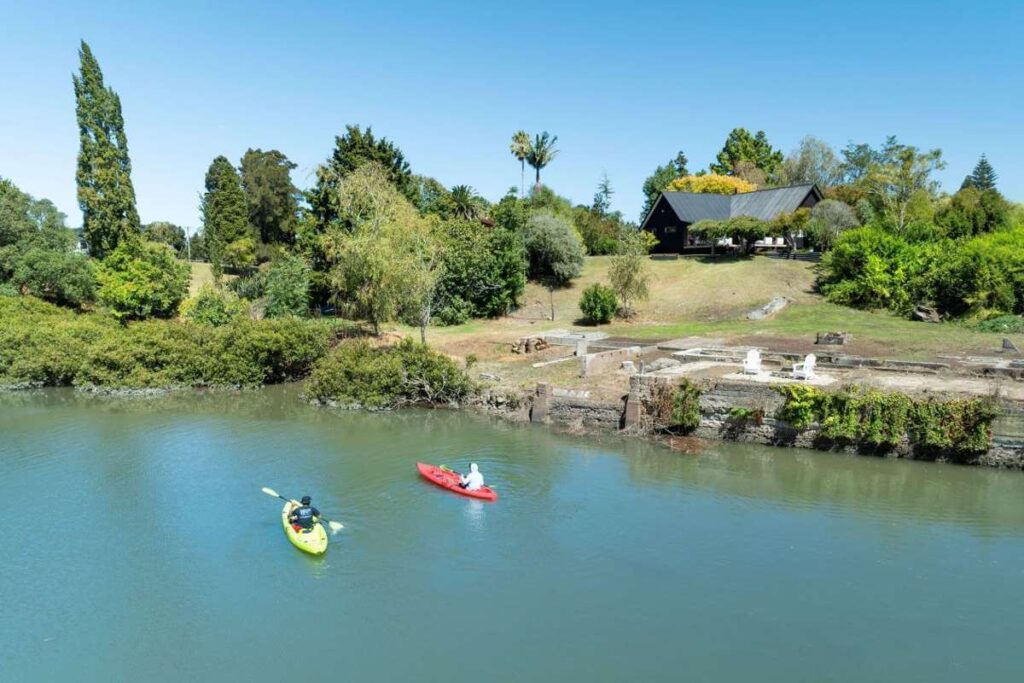
In modern Riverhead, beneath the cafes and riverside hospitality, echoes of Pitoitoi can still be heard in the tides of the Waitematā and the stories of those who came before