

Ritchie Hoko has spent nearly 30 years in the trade. Five of them painting the northwest. He’s still got the overalls to prove it.
By 9am on a Tuesday, Ritchie Hoko has already set up scaffolding in Kumeu, patched stucco damage in West Auckland left behind by a guttering crew, and mentally flagged a third job waiting out at Piha. The interview is the only thing slowing him down.
“If I wasn’t in this interview, I’d be out at Piha right now,” he says, laughing. “Checking on the final day of a job over there as well.”
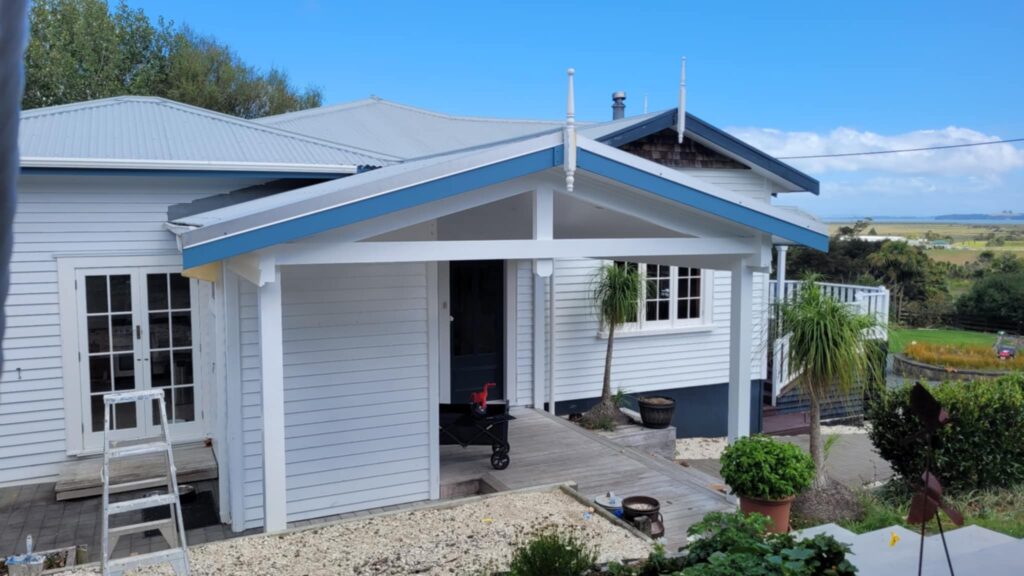
Ritchie runs Rix Painting, a subcontracting operation that now employs between four and seven staff at any given time. He got his start in the trade back in the early 90s, stripping lead-based paint off Ponsonby villas with nothing but a linbide scraper and a blowtorch. No masks. No gloves. Just hard yakka and a quick eye.
It wasn’t exactly a planned career move. A neighbour in West Auckland needed someone for prep work, Ritchie said yes, and a head contractor showed up a few days later and just pointed at him.
“You haven’t painted before in your life, have you?” Ritchie says, doing his best impression. “He came back the next day and showed me what to do. And it was all forward from there.”
Forward, as it turned out, meant almost thirty years.
Five of them as a subcontractor in northwest Auckland. His crews turn up on exteriors from Henderson out to Helensville, repainting weatherboards, finishing new builds, and sorting out the damage left behind by other trades.
He also paints for the community, literally. When Waitoki Hall needed work, Rix Painting showed up. And Alto Paint donated all the materials to make it happen. “Community organisations don’t have a lot of money,” Ritchie says. “Often relying on volunteers and funding. So we try to help where we can.”

When it comes to the work itself, he’s equally direct. Ask Ritchie what most homeowners get wrong and he doesn’t hesitate. He walked into a quote recently, pressed his thumbnail against a door frame, and the paint came straight off. Someone had gone acrylic over enamel without sanding or priming first.
“The basics of painting? Preparation, preparation, and preparation,” he says. “Lots of sanding, lots of filling, lots of gapping. All before you get to painting. We could spend weeks on a house prepping and then a weekend painting, and it’s all done. The painting’s the easy part.”
The projects that end up costing clients the most are usually the DIY plastering attempts, patched walls done without the right prep, roller marks left on ceilings, and the wrong paint type in the wrong place. Fixing that work costs more than getting it done right the first time.
“We always advise people not to do that sort of thing because of what it costs them. It’s really about trying to look after our clients.”
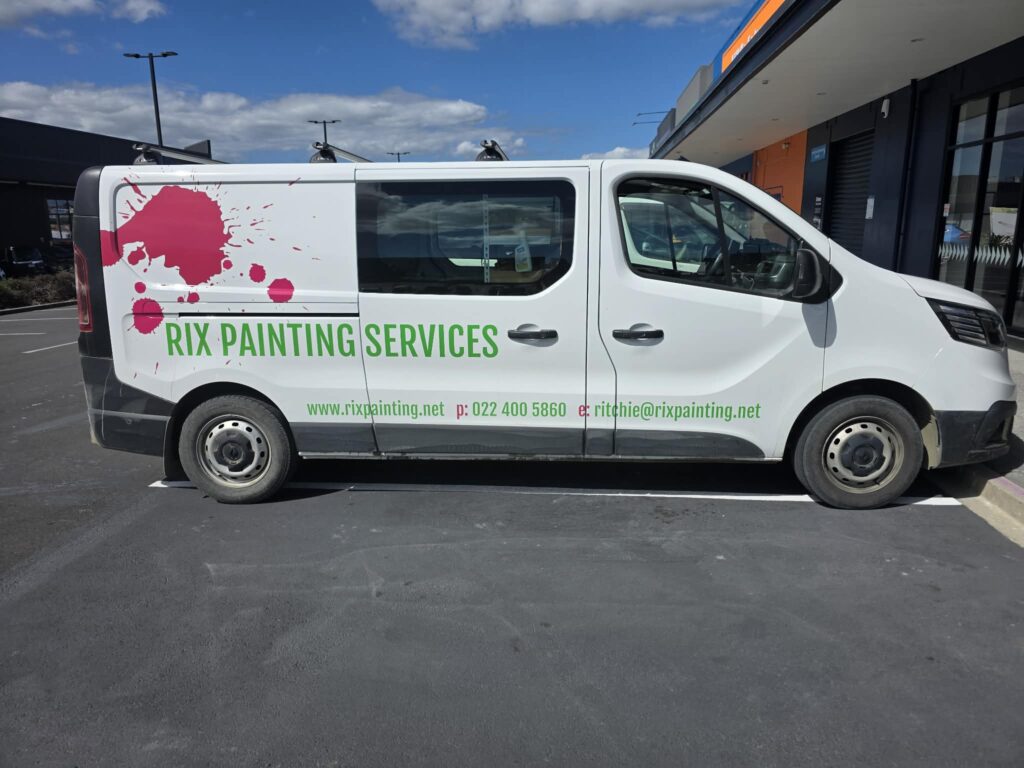
That same clarity shapes how Ritchie thinks about where he’s headed. At 62, he’s shifting off the tools and into a more managerial role, something he wishes he’d done years earlier. For most of his career he ran lean as a sole trader. Good income, steady work, but at the end of the day just keeping himself employed.
“I would say to myself: grow. Grow a business where you can step back. I could have done what I’m doing now a lot earlier.”
He’s got an 18-year-old on the crew right now who’s been painting alongside his parents since he was a kid. Ritchie reckons he’s got a great career ahead of him. If he sticks at it and thinks bigger than a job, he just might.
After about thirty years, Ritchie knows the paint is only ever the finishing touch. The real work always starts long before the brush comes out.
Business:
Rix Painting
Location:
West Auckland / Northwest Auckland
Contact:
ritchie@rixpainting.net
What they do:
Residential and commercial painting, and
prep work across northwest Auckland.